Sunday, July 03, 2011

How long is too long? Or too short?

I’m at the midpoint of my summer internship and I’m having mixed feeling about…well, everything. It’s been a month and I’ve accomplished a lot, in terms of interviewing women, collecting research and visiting several different sites, but I feel like I’ve accomplished nothing in terms of integrating and adapting to Indonesia. There are definitely some reasons I can identify as to why I feel unaccomplished, but I’m sure there are other reasons that aren’t making themselves too evident:

  • I had assumptions and expectations – someone once told me that making assumptions was the dumbest thing you could do (maybe not in those words, but that’s what she meant). Ever since then, I cringe when I’m talking to someone and I say, “Well, I assume it was because….” because I wonder if they’re thinking, “wow, she’s making assumptions – not smart.” But then I remember that everyone makes assumptions. I didn’t realize that Indonesia was as developed as it is and I didn’t really grasp that there were 200 million people here. I mean, how can you really know what 200 million people feels like, when the largest population you’ve lived amongst was 500,000?

  • I also expected things would be a little different than they are. I don’t really feel like I’m doing a ton of physical work, since I’m not doing the interviewing, but rather listening to 12-15 interviews a day in Indonesian and then circling the women’s responses on my questionnaire. I suppose interviewer fatigue has set in. I know I’ll have a ton of work to do analyzing the data and writing my report when all is said and done, I just wish I was a little bit more involved in the day to day. I also thought (though I don’t know why) that I’d be involved in coordinating things, and since I’m not and have really no control over the coordination of our day to days, it gets annoying when things don’t go right. Everyone seems very laid back about the research I’m doing, but I feel very protective of making sure that everything’s perfect since I’m planning on using the data for my master’s paper and hoping to publish or possibly submit for Global Health Council. It’s frustrating to think that you’re on the same page with someone and constantly get questions like, “So, what do you want to do?”

  • I constantly compare everything to Mali – I love Mali, we all know that. My heart is there, my life is there, and I will be there (soon). During my first year at UNC, I focused on Indonesia in a variety of classes or for papers. I wrote about Islamic Feminism in the context of Indonesia and studied the data from the DHS on family planning until I was sick of it. I was intrigued by the idea of Indonesia and how so many public health programs had been successful here. I thought it would be a great idea to see them in action and see how they could be transplanted or adapted to Mali/West Africa. I also kind of fell in love with the idea of Indonesia – the largest Muslim population, the sight of hundreds of beautifully decorated mosques, a country made up of thousands of islands, Bali – what wasn’t to fall in love with? I even talked to Baba about the possibility of moving to Indonesia and working here for awhile. He definitely didn’t love the idea, but I thought I needed to come see it to decide if the romantic idea of Indonesia in my mind matched the reality. It doesn’t for me, and no matter what happens here, I’m really happy that I know that. I miss the simplicity of Mali: the deserted highway from Bamako to Sevare with the exception of villages popping up here and there; the dusty roads traveling out to villages, the freedom to ride my bike anywhere and everywhere I want, and more than anything, the ability to connect and communicate with everyone and the openness and friendliness of – most – Malians. I don’t speak Bahasa Indonesian, and to be honest I really have no desire to. This pains me to say, as a devout Peace Corps volunteer, whose goal was to integrate into the community. Instead of listening to my Learning Indonesian podcasts and faithfully carrying around my Lonely Planet Phrasebook, I speak to most people in French and Bambara because in my mind, that’s what I should be doing in a foreign country. I don’t anyone here, with the exception of Anne, the woman I’m living with, a few staff at Jhpiego and my translator. And maybe it’s easier not to know anyone? Since I don’t have long term plans here, maybe it’s better not to get attached to anyone, I don’t know.
I'm definitely at a midpoint slump, and have marked every activity and deadline on my calendar until vacation in Bali and until I leave at August 2nd to return to Chapel Hill. So I ask, how long it too long or too short to be in a place? Obviously our internships couldn't be longer than 2 or 3 months, that's the nature of the academic schedule. But for me, without having more time invested in a place, and knowing that things will continue here status quo after I leave, and that my life is waiting for me in Chapel Hill, I don't feel motivated to invest in integrating here. Maybe it's the question of time, or maybe it's the question of where I am. I feel strongly that I would be motivated to integrate if I were in another West African country. I'm happy I'm in Indonesia right now, but I'll be happy to leave and continue my journey as a public health practitioner and advocate for women and children's health in West Africa.

Saturday, July 02, 2011

Women in Bojonegoro know how to deliver in facilities


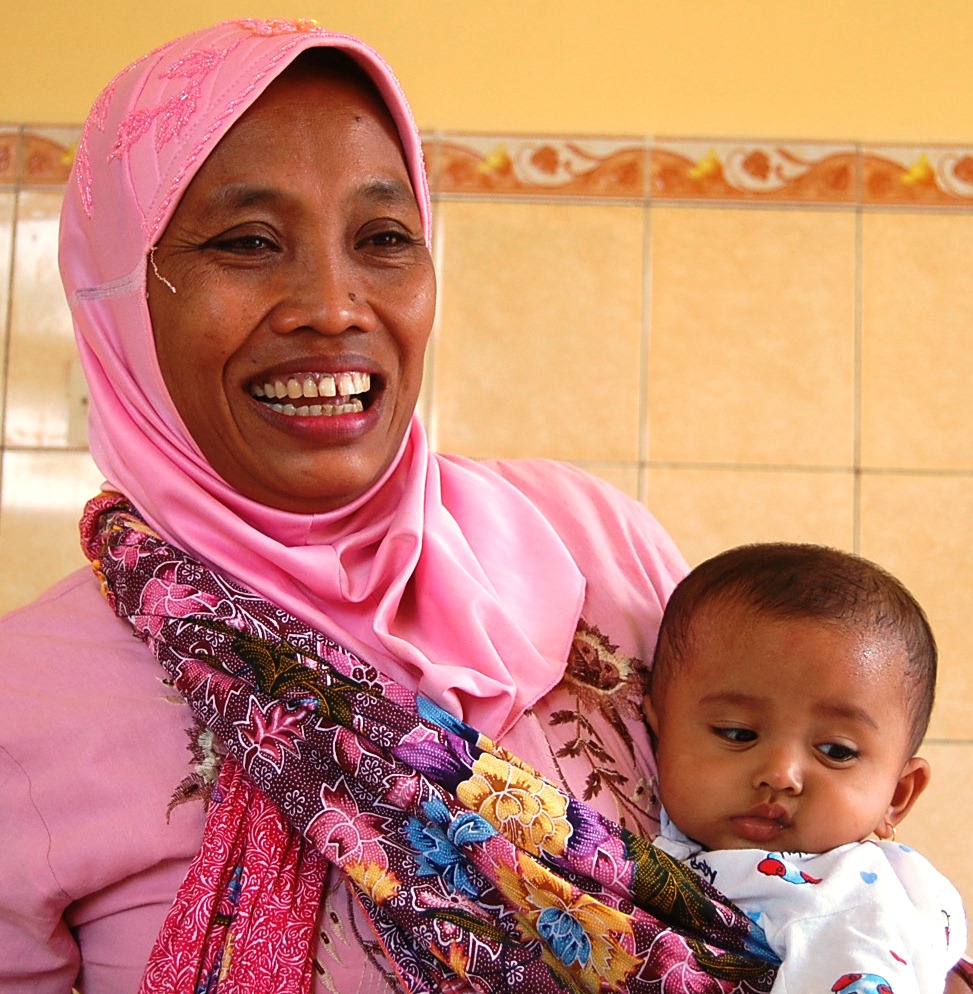
My favorite respondent in Bojon: She's 45 and her daughter was born 4 months ago. Her daughter's older siblings are 14 and 21. With this unexpected surprise, we can definitely say that family planning was needed in this household.

But she's SO adorable!

Two districts down, two to go. I was excited about our trip to Bojonegoro (which I’ll refer to as Bojon) because it meant flying to the opposite side of Java and seeing how this place runs it’s maternal and child health program. We flew into Surabaya, a large port city and the second largest city in Indonesia (and one of the largest red light districts in Asia, I just found out). We didn’t see the city, but started out to Bojon. Despite Google maps telling me it was 110 km and about 2 hours, it turned out to take 3 hours to get there. The road was good, part of the trip was on a toll road. The road after the toll road was quaint – it seemed like we were driving through small towns along the way, each had a beautiful mosque adorning the road side, most under construction of some sort. The other side of the road had a train track where several trains passed us, passengers hanging out of the doors probably trying to get a reprieve from the stifling heat inside. We arrived in Bojon after sunset, with a light rain and headed to the hotel. Pretty nice hotel, but infested with mosquitoes which required me to go on a killing spree before I could relax. The ceiling was too high, so I often stood on a chair, throwing something at the ceiling as I hurled myself off the chair. It took awhile, but I got most of them! I settled into an evening of CSI and NCIS reruns on TV.

The next morning, per usual, we went to the District Health Office to meet the staff, discuss our research and get their blessings. The women running the DHO were amazing – they knew all sorts of statistics about Bojon, which most other DHOs can’t give me. I was pretty immediately impressed. I found out the following:

  • Bojon Population: 1.2 million
  • 430 villages
  • # of Public Hospitals: 3
  • # of Private Hospitals: 6
  • # of Puskesmas: 36
  • # of Pustu (Assisted Puskesmas): 68
  • # of Ponkesdes (a new facility we had not yet heard of: a facility with a midwife and a nurse): 100
  • # of Polindes: 300
  • % of women who use TBAs for delivery: 2

I also found out that between 2007 and 2010, there was an increase in MMR to 90 per 100,000, despite a reported facility-birth rate of over 70%. 70%? That’s amazing. Obviously this district is doing something right to ensure a facility-birth rate of over 70%. I felt like maybe we had come upon a district that, despite decentralization, was really paying attention to its women and children and not building bridges and roads with government money. This seemed like a really great start to our week.

A note here about Bojon’s definition of facility and the way we’ve defined facility for our research. They have included all of the facilities above (Hopsital, Puskesmas, Pustu, Ponkesdes and Polindes) in their 70%+ numbers. Our survey doesn’t include Ponkesdes, Polindes and really shouldn’t include Pustu either. None of these facilities have more than one provider (a midwife) in case of emergency or complication. That said, the Polindes that we found in Bojon were incredible. They were new, clean and well stocked with equipment and medicines. Much more so than some hospitals I’ve seen and certainly more than Polindes we’ve seen in other districts that amounted to no more than a small two roomed facility that had nothing inside of it. All this is to say that even though Bojon quotes this 70%+ number, we should still be able to find non-facility births, either at home or at these facilities that aren’t included in our research. After the first two days of visiting Polindes, where we should have found some non-facility births, but whose midwifes encouraged all the women to go to her private birthing center instead, we hadn’t found any. With this problem, we went to the DHO after we finished our interviews to discuss how to change our strategy of which villages to visit because we needed a certain number of facility, non-facility and pregnant respondents. When we reported to the DHO what had already happened, she yelled to her assistants to bring some documents to her. All of a sudden, the rate of facility-births in Bojon district was 94.7%, not the 70%+ that was quoted two days before. Okay, technically 95% is more than 70%, but there was definitely a problem in the way these numbers were presented to me and I was frustrated. Regardless, since the above mentioned facilities are part of the 95% number, but not part of our research parameters, that still meant that we should be able to find women that had delivered in these facilities, specifically any one of the 300 Polindes that I was told existed. The DHO staff seemed to think I was crazy and that I wasn’t for some reason understanding that we couldn’t find these women. I, at the same time, seemed to think they were crazy trying to push off a 95% facility-birth rate, while telling me at the same time that their MMR increased. To top it all off, my translator was driving me crazy by telling me that their numbers had to be correct, they had the data to back it up! She said she didn't believe it, but they had the data. Right, like data is never wrong. This comes from someone who is supposed to be helping me gather this research and later analyze the data. I told her I really didn’t care what their numbers and their data said, that the numbers didn’t jive. Over and over I was told, “Well, you’re not going to be able to find the numbers of non-facility women that you’re looking for,” while I repeated to them over and over that we needed about 23 non-facility women to interview. I could have probably backed down, but I was fighting for the statistical significance of my data (and my pride)! I’m not really sure how things worked themselves out in the end, since I was so pissed that I was being told that out of 400 non-facilities, I wouldn’t be able to find 23 women.

The first woman I saw feeding her child with a bottle. She is unable to breastfeed.

Quite the opposite of the woman above, this woman is overfeeding her baby to the point of obesity. This baby was only 3 months old and his mother had a hard time carrying him around. She reported that she was only feeding him breastmilk.


In the end, we wound up finding our women, though only 20 of them. Most of them had delivered at the Polindes, though there were a few home births mixed in there. We visited a variety of puskesmas, polindes and private midwives clinics. There was definitely an energy about the women in Bojon. They all seemed to have really good reasons for going to facilities, which means that someone is doing their job educating the women about the need to deliver in a facility. The women we found that delivered at home did so either because they didn't have money and didn't know about jampersal (the government policy to pay for births at facilities) or didn't make it to a facility in time.

Polindes in Mojosari


Delivery room at the polindes.

Actual trash cans outside of the polindes and along the road in this village

Village map in Sidobandung - green, yellow and red stickers all show where pregnant women live and classify them by normal, low-risk and high-risk pregnancies. The map is updated as women become pregnant.

Polindes in Ngunut: A map of the village including locations for the polindes, mosque, and showing rivers and bridges.

In the labor room at the polindes in Ngunut. I guess a rusty nail on the wall is as good as place to leave a stethascope

This is an emergency medical kit with essentials needed during labor and if there are minor complications. This one is quite empty, perhaps the reason that the midwife takes all the pregnant mothers to her pri

We conducted fewer interviews here than in the other two districts – only 68 compared with 82 and 74. For whatever reason, the situation at the DHO completely frustrated me and put quite a sour note on my week. Bojon made me feel completely over being in Indonesia and completely ready to go home. I’d never been happier to hear the words, “Welcome to Jakarta” from the airline pilot. I needed the comfort of my Jakarta house with swimming pool and good food before heading out to our last district: Serang.

Wednesday, June 29, 2011

Jakarta Breaks and (scary) Indonesian Food

For the first two weeks I spent in Jakarta, all I could think about was getting out to the field and seeing what “real” Indonesia was all about. After being in the field for a week, I shocked myself by being pretty excited to go back to Jakarta. I know, I’m crazy, right? I’ve really learned to enjoy and relish the couple of days I have in Jakarta by sleeping in and spending at least one day by the pool working on my summer tan, killing my annoying psoriasis with UV rays and falling into the plot of a book. Since I’ve done this twice already and am coming upon the third time, I must say it’s the thing that makes me most excited to go back. Well, the pool and the food. Before I came my preceptor send me a short document about things to know/do before coming and one of them talked about the food saying that “Indonesian food is nothing special.” I read this a few times and thought, well, that can’t be right, there have got to be good things. As I thought more about it I realized I didn’t know one Indonesian dish, nor had I ever seen an Indonesia restaurant that I could test out. Nevertheless, I kept an open mind and trying the food remained at the top of my list of things to be excited about.

Before I talk a little bit about the food I’ve tried (which admittedly hasn’t been too much) and that I’ve seen, I want to send a huge shout out to Ibu Yumi, the cook at Anne’s house. She’s been a cook for many years for expat families and she can equally make a delicious tofu and stirfry as she can tacos or lasagna. The first few nights I thought, “Hmm, American food…not too exciting.” And now, I long for her cooking. My first day we went to a shopping mall, to the food court for lunch. Looking around, it was mostly Indonesian restaurants, but also Malaysian, Vietnamese, Korean and Japanese. The descriptions of food included cow’s feet, chicken feet, duck eggs and other mysterious delicacies that I didn’t want to venture into on Day 1. I also learned that a lot of the dishes are based in coconut milk, which isn’t abnormal for Southeast Asia. Normally, I love coconut milk and I even jumped for joy at Trader Joe’s when they brought back their Thai tuna packets that were based in red and green coconut curries. But I also took a cooking class in Thailand where all 9 of the dishes I learned to make were based in coconut milk and part of the class was to taste everything afterward. As of May 2009, coconut milk is one of my least favorite things. So, when I found out that the majority of the dishes are in coconut milk, my excitement level dropped considerably. The upside to Indonesian food is that all meals have rice! Even though I love a little variety in my diet, I could eat rice every meal for the rest of my life; that’s the Mali in me. All that said, when we’re not in Jakarta, food options are sparse. I’ve become very fond of this one “sauce” (based in coconut milk, can you believe it!) called renda (from West Sumatra), and of course there’s always a variety of friend noodles to be found. But in general, I eat a midafternoon lunch and try to avoid the food the rest of the day, instead searching for some fruit vendors on the streets.

The window of a padang restaurant

I thought I was doing alright, if not loving the food, at least tolerating it and eating what I found edible, but the other day we went to a restaurant that serves Padang food (the same food where the renda sauce that I like originates) and the style in these restaurants is to bring small plates of everything to the table. You then choose what you want and you only pay for what you eat. Afterward, I’m assuming, they take the plates back and return the dishes to their larger serving bowls and waits for the next customers. My issue with this style of serving food is that unless you arrive as soon as it’s cooked (presumably at 6 or 7 AM), the food is always cold. The rice is warm and the idea is that eating the padang food with hot rice will heat it up, but one of the many lessons I learned in Africa was not to eat cold or luke warm food; hot food meant that any germs, parasites or other contaminants would be less harmful to my digestive track and system. Nevertheless, I eat this food with caution and hope for the best. My other issue, and possibly the reasons I will limit my visits to padang restuarants, was the choice of dishes that were brought to our table. My renda was there, this time with a choice of beef or beef liver, two things I generally like, but then there was also chicken brain, tripe, intestines, lungs and spleen.

A variety of padang food brought to our table

I considered taking photos of each of these dishes and then decided against it. While I’m happy that all parts of the animal are consumed here – for many reasons, among which are the ever growing worldwide desire for meat, ensuring that the population has protein and not wasting it – it was a bit of a shock to see my fellow colleagues eating and enjoying these dishes. It also renews my vow to continue searching for greens and fruit, while outside of Jakarta, whenever possible. I promise more food photos, plus a trip to the market coming soon.

Extra Photos

A couple photos I forgot to include, and they don't really fit in anywhere else from Karawang:


After finishing some interviews at a private midwife's house/practice, I stumbled upon this school with all the children dressed to a tee in their uniforms. I gathered them together for the photo, this isn't the natural way they spend their day. Per usual, the girls act very demure and well behaved while the boys behind them try to show me their best devil horns or I love you signs, I can't really tell. Click on the photo to enlarge.

Problems in Karawang

I often feel like my life here is a comedy of errors and that all of a sudden, the guy from Candid Camera is going to pop out and say, “Surprise, you’re on Candid Camera.” Sadly – or maybe not – that hasn’t happened yet. Karawang certainly started off that way. Midway through the week, we visited a village that was only about a km or 2 from the city, but down a terribly broken road that was jarring for the 10 minutes it too to ride down. In addition to that, the only way to cross the “river” that divided this village from the jarring road, was a small foot or moto bridge that I wasn’t too trusting of to walk across. When the midwife coordinator suggested that our hired car drive across the bridge, I immediately imagined the driver being unable to balance on the edges of the bridge and us in the water. Luckily, he had the foresight to say no. The one thing I love about the villages that we’ve visited is that they are little labyrinths. The roads are narrow, and there are so many streets jutting off from the main one. We arrived at a posyandu in progress with tons of women and children. The village health worker, who was weighing the babies, was actually a man. I had, until now, only seen female village health workers, so I was happy to see that men were engaged in the fight toward maternal and child health as well. We set up in the village health worker’s house and got to work right away. The interviews started off as usual, but as we got to the end of the group, this weird thing started happening. We ask all postpartum women this question:

Would you recommend to your friends and family to deliver at the same location where you delivered? Which of the following is the most important reason influencing your decision?

And then we provide this list for them to choose from:

1 Cost

2 Distance

3 Cleanliness

4 Transport available

5 Good supply of drugs and equipment

6 Type of health provider

7 Experience of health provider

8 Attitude of health provider

9 Relationship with health provider

10 Being treated with respect

11 Facility where usually go

12 Safety for mother and child

13 Health worker recommended

14 Referred by another facility

15 Other (specify)

98 Don’t Know

Not only were many women unclear about the list of choices – it is a bit cumbersome – but women’s response to the question about recommending was often, “I don’t want to recommend anything. What happens if that woman has a complication or problem, then it’s my fault because I recommended it.” Interesting theory. I can understand the guilt that women might have in this case, but the question doesn’t ask women to be so complex in their thinking and think of repercussions down the road. It made me think that maybe women don’t sit around and talk about this stuff like I thought. I thought that on any day, when pregnant and postpartum women were hanging out, a conversation might come up about where the women delivered or were planning to deliver, and each woman giving her (unsolicited) opinion about which location is the best. Does this happen? Does it not happen? Obviously, I don’t really know. I was also surprised that women would go to such lengths to think through the repercussions of this question, yet they were confused and often unable to answer the question associated with the list. After this roundabout with at least 5 women, it felt like one of those days that I just wanted to go back to the hotel, crank the AC and read my Steig Larson book. Unfortunately, our hotel was ridiculously far and inconvenient, taking us about an hour and half from the village to arrive at the hotel. With that distance, we should have just stayed in Jakarta.

Tuesday, June 28, 2011

Destination: Karawang

Our second field visit, destination Karawang. Karawang is in Java, just east of Jakarta about one and half hours. Since its so close, we left very early on Tuesday morning to beat the traffic. Karawang is one of Jhpiego’s cervical cancer sites and that’s about all I know. I’m not sure what they’re doing in terms of cervical cancer, but I’m happy to know that the health systems are at least equipped to tackle cervical cancer, which is more than I can say about a lot of countries where basic health needs are barely being met. We started our visit with the obligatory visit to the District Health Office and then traveled to the puskesmas where we would be basing our village visits. I’m still constantly surprised about how big places are. I don’t know the square mileage of Karawang, but it seemed as if we could drive at least an hour in any direction and still be in Karawang. After we found the puskesmas, we picked up the midwife coordinator and headed to a small village, Dukuh Kariya, to begin our interviews. I was already pretty tired at this point, I only slept like 4 hours the night before, so the thought of interviewing 15+ women was not getting my pumped about the day. We met at one of the village health worker’s houses where the posyandu takes place. By the time we arrived, the posyandu was already finished, but she was able to go and call and bring some of the women back to talk with us.

Midwife Coordinator, Ibu Yuli, who was very awesome and very maternal.

Posyandu sign in Dukuh Kariya

Our interviews went pretty well, and we were learning a lot about services in this village. I previously talked about jampersal, a governmental program that will pay women to deliver in facilities. There are some challenges around it because the government will only reimburse the midwives 350,000 RP, when they might normally charge 700,000 RP or more. So, I think it’s a good program to get women into facilities, but I think its limiting midwives and creating a situation where they can start to corrupt the system (which we’ve already seen) by telling women that it costs only 100,000 or 150,000 Rp instead of 700,000 Rp and then they’re pocketing the 150,000 and getting the 350,000 Rp reimbursement from the government. Confused? Just read it again. The bottom line is that there are still kinks to work out and since the government hasn’t (and can’t) implement jampersal nationally, it’ll take awhile for the individual districts to work out the problems. That said, Dukuh Kariya took jampersal in a whole new direction. The private midwife who lives and works in the village is a government employee who also works at the puskesmas and earns a monthly government salary. Based on this, it appears that it wasn’t so much her decision to implement jampersal in the village as it was decided for her. We then learned that jampersal is accepted at her private facility as well as for HOME BIRTHS. That’s right, home births. The whole idea of this program is to get women to a safer facility, and now we’re offering them to stay at home and deliver for free. Problematic, for sure, but I had to remind myself – as I have to almost daily – that we’re not here to change things, we’re just here for data. This news was the biggest of the day because it was so odd. Since Indonesia decentralized, which I don’t know much about, the districts have more power than the national government and therefore decide what to use their money on. That’s why we see that Karawang has implemented jampersal and Minas, for example, hasn’t. Apparently the districts use the money for infrastructure instead of health, which isn’t exactly surprising. So, it was good to know that Karawang took the leap and started providing free deliveries for women, but it doesn’t sound like it was executed the best way.


Posyandu, filled to the brim with women and their children


Concerned mother with her newborn, talking to the midwife and village health worker about the progress of her baby's health

As I mentioned, our interviews went well with the exception of one woman who made me lose confidence in this research. She was in her mid-thirties, dressed to a T, wearing a satin dress with gorgeous embroidery and a beautiful hijab. Her features were striking, her skin not too light and not too dark, her eyes dark and seemingly full of life. I had high hopes as she walked into the room and sat down. She was pregnant and told us that her plan was to deliver at a private midwife’s clinic because she thought it was safer for her and her baby. These are the women that make me jump up and down with joy. But, as the interview continued she slipped up and told us that she actually wanted to deliver at home because it was more comfortable, and that she lied to us because she was scared. My frustration comes in that, is this happening often? Are we getting responses because women are scared or are the telling us what they think we want to hear? How many respondents are doing this? And what do I do with this woman’s interview? My initial feeling is to throw it away, which is probably what I’ll do, but it’s frustrating to think that more of our responses might have this problem and we don’t know about it.

The gorgeous landscape and rice fields of Karawang

Monday, June 27, 2011

Minas: in Photos

I'm sharing some photos from my last few days in Minas. Not all have or need captions or comments.

Women attentively listening to a village health workers health lesson


Though not one of our respondents, I think this woman is beautiful.


Triplet Girls! Mom was only able to deliver one with the midwife and the Doctor came from about 10 km to help deliver the other 2.

This little one's face is so full of expression