Friday, June 24, 2011

Site Visits Begin – Minas

Our first week of field visits begins! Originally, I wrote that I thought we’d be going to Serang, Kutai Timur and Bireun, but the plans changed. Though it hasn’t been said, since my translator is pregnant, the Jhpiego team wants to keep the field visits relatively close to the capital and without poor travel conditions. That’s not to say we haven’t found bumpy roads, but…compared to what we could find, it’s not too bad. So, the plan, or so we thought, was to go to Serang, then Karawang, Bojoengoro and finally Minas. We thought we’d leave on June 13th for Serang, by car, but on Friday the 10th, we were issued air tickets and told we were heading to Minas, via Pekanbaru. Talk about putting the brakes on things. I guess it didn’t really matter where we were going and in what order, but I had already written it in my planner…in pen!

We started in Minas, early, on Monday morning. We went to the main puskesmas to meet the chief midwife, Bu Yuni, and the District Health Officer (DHO), Dr. Rani. We needed Dr. Rani’s blessings to conduct our research and Bu Yuni’s knowledge and networking to help us plan our week. Bu Yuni would accompany us to most of our field visits, since she’s in charge of all of the midwives at the pustu, or assistant puskesmas, or at the village level, and also supervises the community health workers. She was very accommodating in trying to get us the exact number of women that we needed, even if it meant waiting until 4 PM to eat lunch – which it often did.


Puskesmas of Minas - smaller puskesmas' are typically one building, so I was impressed that this facility was 4 or 5 buildings.


Labor and Delivery Room - only space for one woman to deliver at a time, and if another woman needs to deliver, she delivers in the ER (see below)


Maternal waiting room - I can't think of what this is called in English, but after the women deliver, this is the room they stay in. Indonesian women typically only stay at a facility for 2-6 hours, unless there are complications.


The Emergency Room - seemingly well-equipped with the bare essentials, but it leaves a bit to be desired, from a Western stance.


Ambulance - this one is out of commission, but was previously used for emergencies


A bit about Minas: Minas is one of Jhpiego’s Chevron sites, meaning they get funding from Chevron to conduct their work. From what I understand, the majority of the work they do here are trainings for the health staff. For example, two weeks after our visit, Bu Ita, from the Jakarta office, will be visiting to do trainings on infectious disease control. Though I don’t know the extent of what Chevron is doing, in terms of their social responsibility, I do know that everywhere we drove, the beautiful landscape was broken up by nonstop oil pipelines and oil refinery stations. There was even a military-like base for the expat Chevron employees and their families. Additionally, when we drove to each of the 6 sites, we were driving on primarily paved road – and some of these sites were 30 to 40 km in the bush. Since it’s my first site visit, I don’t know how the others will compare, but I do know that Minas’ infrastructure must be a lot better off than many other districts, because of Chevron’s investment. I also learned that the research we’re doing may be helpful in writing the next proposal for Chevron’s funding in terms of supplying the health clinics, so that’s potentially good news.


One of Chevron's oil refineries, maybe 20 km from the city


After meeting with Dr. Rani and Bu Yuni, we headed out to Mandi Angin. One of the activities that Jhpiego and Chevron supports are Mother’s Groups, similar to centering groups in the US for pregnant mothers. Centering groups, I learned this past year, are similar to antenatal care checks, but instead of visiting the doctor’s office a couple of times and having 15 minutes to discuss any questions or issues, you meet with a group of women and learn from and support one another. In America I thought it sounded like a great idea, and something that would be really interesting to implement in Mali – since most women sit around and talk anyway! – but it was exciting to see it in action here. Despite not understanding Bahasa Indonesia, there were photos and workbooks that the women were all working with, and it seemed like it was working well. It’s a newly implemented activity here, so it’ll be interesting to see if/how they’re monitoring the activity and what progress the groups make. All that said, the first group of women we met were a Mother’s Group, some pregnant and some postpartum.


Mother's Group


Our research questions begin by asking some simple demographic questions to determine religion, ethnicity, education level and income level. We already assume we know certain things: women of a lower education level and lower income level are less likely to go to a facility and more likely to give birth at home. For every interview, I hoped that the women would prove this assumption wrong. In Mandi Angin, we interviewed 13 women, most of whom either planned to give birth at home or had already given birth at home. The interviews were becoming a little tedious, until we met this one woman:


My day one hero who associated facilities with increased safety


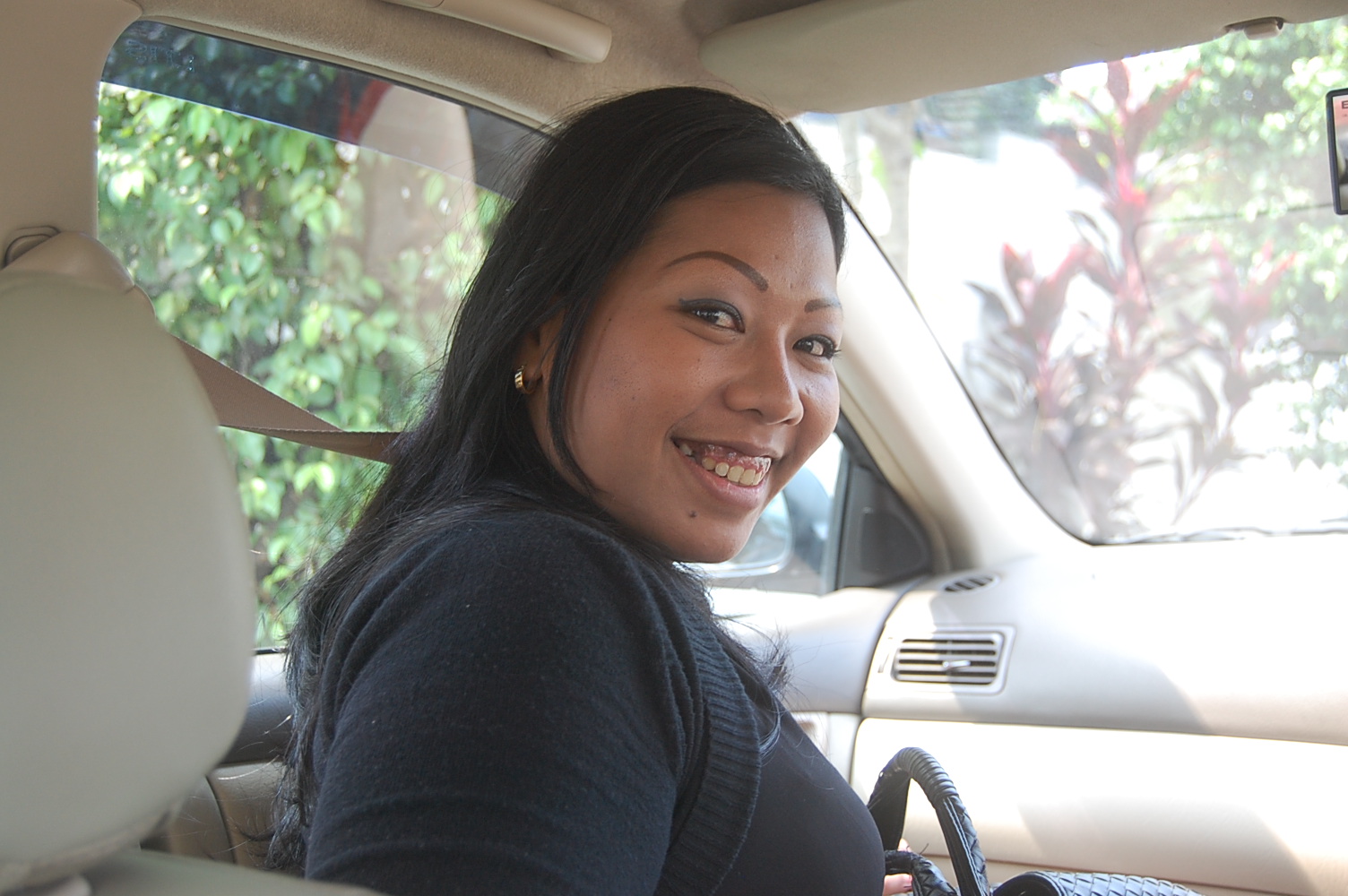
We don’t ask names during our interviews, but this women was the first of the surprises during the week. She’s in her mid-thirties and educated only though elementary school. She was one of the few postpartum women who had delivered at a facility – at the pustu – and when we asked her why she chose to deliver at the facility, as opposed to home, she responded that it was safer for her and her child. I was so pleased, I almost came to tears! After 10 interviews, I was beginning to doubt I would ever hear those words, and I was beginning to wonder if women thought or even knew it was safer to deliver at the facility.


An older postpartum mother


It was a really long first day of interviews, but it ended with sitting on a straw mat, eating rice and fish with my hands, surrounded by a group of midwives and community health workers. It felt good to be in the field.


The midwives and village health workers who were very accommodating

Sunday, June 12, 2011

The Bombshell

After two days of field testing and feeling pretty good about survey, we met with a woman named Marge Koblinsky, a great in the field of MCH who works for both John Snow Inc and is on the board of White Ribbon Alliance, who basically told us our survey was confusing and we needed to start over. This was on a Friday morning and we were scheduled to leave for our first district on Sunday. Awesome. Thankfully she had some time to lend a helping hand and all Friday morning we worked on the best approach to the data we wanted to get and finally decided that we needed to have three separate surveys, one for pregnant women, one for postpartum who delivered in facilities and one for postpartum who didn't deliver at facilities (typically home). The skip pattern we had created in the original document was too confusing to follow, which wouldn't be a problem except for that we're planning on sending the survey to two districts where other staff will administered it. Needless to say, it needs to be crystal clear. Around 1:30 on Friday we had an idea of what we needed to do, and I worked all Friday evening and Saturday to fix the three surveys and make them as perfect as possible.

In the end, Marge's help turned out to be integral to our survey. The frustrating part is that we were basically left on our own until the very last minute to create a survey, with little direction or oversight. In general there has been little coordination or direction to help us, which is odd considering the office here is interested in the results. I had hoped for more help, but I guess in the "real world" that help can come at the 11th hour and that I should be ready for last minute changes. However, my super organized, somewhat OCD personality takes issue with this. Ah, the challenges of working with others.

Thursday, June 09, 2011

Field Testing Begins

After a four day weekend of relaxing and lots of parties (two kids' birthday parties, and a party for the women's national swim team) work started again on Monday. We finished our draft survey last week and Isti contacted midwives at a local puskesmas (government-run clinic or CSCOM, depending who is reading this) and her private clinic and coordinated our visits on Monday and Tuesday, respectively.

Now, first a note on the size of Jakarta and my daily patience testing with traffic. Not only is Jakarta is this ridiculously crowded city, it's also gigantic. I recently read that Jakarta - including suburbs - is 229 sq miles or 661 km2! That didn't really mean a lot to me, until I started comparing it to other places that I'm familiar with:
  • Washington, D.C. - 68.3 sq miles or 177 km2
  • Bamako - 97.3 sq miles or 252 km2
  • Chapel Hill - 19.82 sq miles or 51.3 km2
I mention all of this to say that the distance, in conjunction with the throngs of traffic, makes it miserable to drive in Jakarta, unless it's 1 AM. I left our office at 7:20 and arrived at my destination in Cibubur (pronounced chi-boo-bur), only 12 kms (7.5 miles) away, at 8:20. It took us another 30 minutes or so to navigate through some construction and arrive maybe 5 km away. Ridiculous. We finally arrived at the puskesmas and I was really shocked - it was palatial, compared with the clinics in Mali I'm used to. Granted its in Jakarta and has the potential to serve a very large population, but it was so nice.

Puskesmas in Cibubur

We entered to find at least one hundred people waiting for various services and moved our way though the crowd to the maternity clinic. The floor of the entrance was covered with sandals, typically taken off before entering someone's home or in this case medical facility, and after taking off my own sandals I saw a large group of pregnant women, doctors, midwives and medical and midwifery students. Isti's mother, a very well known midwife, teaches at the school where all of the midwives at this puskesmas attended, so Isti was very well received. We visited the head Doctor to get approval for our visit and explain our questionnaire's intention, and he was very open and the meeting went very smoothly. He actually invited us to come back once we finish all of our research and present to him our findings (a real breath of fresh air after dealing with Docs in Mali who are seemingly just interested in slipping some money under the table to get to do these interviews).

Pregnant women waiting for their antenatal care (ANC) visit with the midwife and doctor.

Midwifery students completing the paperwork for patient's vital signs and weight. The midwives rotate, so sometimes they work on the registration information and other times they work in the exam room with the women.

After our approval, we went back down to the maternity suite and greeted everyone again and got settled in a small corner of the office to start our questionnaire. Since these were field tests, we simply needed to test the questionnaire out on a small sample of women to determine if they understood the questions, if the questions made sense and if they were in a sensible order. Isti and I started the survey on our first patient (photo below) and determined that it took about 20 minutes to administer. Unfortunately, the ANC visits went so quickly that we soon had a line of people waiting so we decided to administer the survey to two women at once. This turned out to be a mistake, we soon found out, since some of the women were maybe too lazy to listen to the questions we were asking and instead were saying, "Yeah, I agree with her." So, lesson one learned: interview women separately.

Our first interviewee: a young woman, pregnant with her first child.


Our young pregnant mother with her medical student, listening to the fetal heartbeat. This is actually the first time I've heard a fetal heartbeat.

We wound up interviewing 10 women before I decided we had done enough. We originally planned to interview 20, but there were some errors in our questions and I thought it to be a waste of time to interview. If the questions aren't perfect, we can't use the data we collect so it was time to stop. We worked the rest of the day on improving the survey since we had interviews to do on Tuesday as well.


Immunization Chart, in Bahasa.

After we made the changes we thought were necessary, we took to the streets on Tuesday to continue. This time, we used Isti's family's private clinic as a base, and one of the midwifes at her clinic walked us through the surrounding neighborhood. The interviews here were again just tests, this time with the slightly changed questions. Of course, one of our questions asks the respondent to rate the quality of service she received with the midwife who delivered her baby, and having that midwife sitting next to her, smiling, didn't necessarily give way to the most honest responses. So, lesson number 2: have midwives help us find pregnant and postpartum women, but don't allow them to sit in on the interview.

Postpartum woman who delivered at a private clinic

We did about 5 more interviews on Tuesday and then went on a wild goose chase for my cell phone that ultimately wound up lost. Amazing how these things disappear in a matter of seconds. By the end of our two days, we thought that our survey was pretty good and ready to be put to the test out in the districts. Little did we know what would happen next....

Monday, May 30, 2011

Jakarta Weekend

Since I arrived in Jakarta, I've been pretty underwhelmed. I'm not sure why I didn't ask more questions or prepare better (oh wait, I was super busy until the day before I left!) but I arrived feeling really unprepared to be here. I was mentally prepared for Mali, or another West African country, and soon realized that I couldn't be the farthest away from Mali. The neighborhood that I'm living and working, Kemang, is Western-central. The best supermarkets are here and all of the Western amenities - yoga studios, fast food, a Pizza Hut that looks nicer than most American restaurants, you name it. Being secluded to Kemang, I started to think that all of Jakarta was like this, and even worse that all of Indonesia was like this. Luckily, this weekend Isti and her husband Agum took me out and about.


Agung and Isti at dinner

Saturday we went to Pondok Indah Mall, which I swear is the nicest mall I've ever been to. We really came here to browse since everything was so expensive. There were two huge department stores and others like Marks and Spencer, Espirit, Mango, Zara, and too many others to remember. This mall was really two malls, connected by a walking bridge (presumably crossing the busy street below) and was super crowded as well. After going here, I pretty much hated Jakarta and just wanted to get out of town. It's nice to have the option of going to a mall - there are no malls, and nothing even comparable to a mall in Mali - but consumerism has really taken over here.

Saturday's excursion wasn't planned, Isti just showed up to pick me up. Sunday, however, we had planned to go shopping after we went to a wedding. When I found out we were going to a wedding, I was super excited (since I still haven't been to any weddings as an adult except for my own) and it was an Indonesia wedding! After Isti and Agum picked me up, we started driving to East Jakarta and I finally got outside of Kemang. Jakarta is certainly more developed than I'm used to, with highways and tolls and the like, but it was great to see fruit vendors lining the streets at the big bus station, people selling their goods while weaving in an out of traffic, and driving through what I can only compare to downtown Bamako and Grande Marche area. I felt at home and immediately reconnected to this foreign place that I was starting to dislike. As a wedding guest, we arrived to greet and eat and then leave. Of course I snapped a shot of the lovely bride and groom.


Chandra and Indiri - Indiri is Isti's cousin from her father's side.

After the wedding outting, we drove through Central Jakarta to South Jakarta to the Ambassador Mall and then Plaza Semanggi for dinner. Since Jakarta has a population of almost 12 million, you can imagine the insanity of traffic and parking. At the Ambassador Mall, we entered the parking lot, but just kept driving until the 5th level (there were no options for parking below that) and excited to start looking. The cars were packed in and some shoppers even left their cars in neutral so the parking attendants could move them, in a straight line of course, if necessary. I think this mall had 7 or 8 levels and the stores weren't as glamorous as the previous day, but much more in our budget. Since a lot of the clothing industry invests in South/Southeast Asian countries for their manufacturing, this mall had "seconds" from stores like Banana Republic, H&M and Zara, but everything was super tiny (probably why they were seconds).

View of South Jakarta, from either the 5th or 6th level of parking at Ambassador Mall.


View of South Jakarta from Plaza Semanggi at dusk.

It was nice to finally see a bit more of Jakarta than I had seen in the previous week, and it gave me hope that our trips out to the districts will be fruitful and full of lots of work. I think Jakarta is a nice city to come to after 2 months in the field (much the same way I felt about Bamako), but right now it just feels a little bit too much like America to me.

Midwives

Though it hasn't even been one week in Jakarta, it feels like it's been two! I went to work the day after I arrived and met my translator, Ibu Isti along with some of my co-workers. Isti is a bidan, or midwife, who works her family's private clinic. She's also a former member of Indonesia's national women's basketball team member, and translator extraordinaire. Isti went to medical school but decided to become a midwife instead.


Midwifery in Indonesia is really widespread, and in fact there are too many midwives. Previously, the midwifery schools had better standards, but they've popped up everywhere making it very easy, and pretty inexpensive to get a certificate/degree. Midwifery jobs are pretty easy to come by, and midwives can either work independently as village midwives, work at government-run clinics and hospitals, or work privately in their own, or others', clinics. Access to medical care is different in Jakarta, but in the rural areas, many women still give birth at home with traditional birth attendants (women with no formal education) and consequently the maternal mortality rate (MMR) is still very high for Asian countries. More and more, women are using midwives, private clinics or government-run clinics, but the numbers are still dismally low. In January of this year, the government created an free insurance scheme called jampersal that makes it free for women to go to both public and private facilities to give birth. Once the facility claims the birth, they government reimburses them. The problem is that many women still don't know about this free service and so they aren't using it. I hope that we can educate women about it and encourage them to go to facilities instead of staying at home.

Not surprising, the cost of giving birth is much lower than in the US. But the prices vary depending on if you stay at home with a TBA or with a midwife, if you go to a public facility or to a private facility. The cost can range from 250,000 rupiah (RP) to 1,000,000 RP (approximately $27 to $120). One of the problems with jampersal is that the government will only reimburse 350,000 RP so the private clinics that normally earn 750,000 for one birth are having a difficult time and are trying to discourage the use of jampersal in their clinics.

Isti and I are working on a survey to ask women about their perceptions of giving birth in a facility. We are going to investigate the different reasons (cost, transportation, cultural values, etc) that influence women's decisions. Few surveys have been conducted about women's perceptions of health care, but we found a few that helped us to create the survey.

We're now in the final stages of creating the survey and we'll meet to discuss the content and to decide which districts we're going to visit to deliver the survey. The MCHIP project works in three districts in Indonesia: Bireun in Aceh, Kutai Timor in Kalimantan and Serang in Java. The map below isn't very detailed, but Bireun is just east of Banda Aceh, Kutai Timor is north of Samarinda and Serang is due West of Jakarta near the dot for Merak.

Hopefully we'll know our destinations and schedule today or tomorrow and can plan our interview schedule. Isti has worked as a translator with three other midwife volunteers here and I'm really looking forward to working with her and learning from her.

Thursday, May 26, 2011

Welcome to America.....er, Jakarta

As the jetlag has finally worn off and I have feeling in my lower limbs again, it's time to welcome you all to America, er Jakarta, Indonesia. The introduction says it all, I think, but suffice it to say that things aren't that different from a big city in the US here - Probably more NY or LA, as opposed to DC or Philadelphia. I arrived pretty late on Wednesday night and got through customs, immigration and baggage claim with no problem. I exchanged some money and headed to the taxi stand where instead of getting the nice black Mercedes to take me to me to town, I essentially wound up in the back of someone's minivan praying the entire 50 minute drive that I was going to arrive at my destination, not at a brothel. Talking to the taxi driver and coordinator was my first sign that I was in a foreign land. I'm pretty sure I slipped into negotiating in Bambara when he told me the price was 280,000 Rupiah (about $30, but it sounded like WAY more in my head). So we set off to Kemang, the neighborhood/district of Jakarta where I'm staying. This big city - of which only a fraction I actually saw - introduced me to brand new cars (including the bright green Mazda 2!), Harley Davidson, Starbucks galore, and huge shopping malls touting Burberry, Gucci and the likes. The whole time I'm thinking, "Okay, did I really get off the plane in Jakarta?" Once we arrived in Kemang, essentially the foreigner area of Jakarta, it really turned into little-America. KFC, McDonalds and Pizza Hut, and then some other random foreign restaurants like an Irish Pub, German Beer Garden and endless Dim Sum choices. Trying to take it all in, we eventually arrived at my abode and I couldn't have been happier. All I really needed was a horizontal sleeping surface and water to feel human again.

By way of where I'm staying - the Chief of Party (Director of the project, for those of you not familiar with "aid-speak") for the MCHIP Project, Anne, has graciously offered her guest room for my stay. Her family is sweet and her pool looks inviting, though the weather hasn't been too awesome yet.

All in all, my arrival was exactly what I would have expected a 12:00 AM after a 29 hour trip - interesting. I'm looking forward to exploring a bit more of the city and starting on work. More to come!

Wednesday, May 13, 2009

Traveling Alone in SE Asia

"Yeah, traveling alone can be like that - sometimes amazing, sometimes uninspiring." Spoken by a great friend who I'm sure, like many of us, has traveled on his own. This isn't my first time traveling alone, but it is - so far - my lonliest and most uninspiring. I'm in Thailand for the moment and I can't think of a place I'd rather not be. Nothing about the country has excited or thrilled me to the point of wanting to stay. I counter in my head, well, it'd be different if I were with someone else, but I don't think it would be. I think I chose the wrong places to visit, I think I wasn't positive of what I wanted to see while here, and in the end, it has been uninspiring and almost regretful. Another friend told me, "Skip Thailand, go to Laos instead." I had barely even heard of Laos, but I had heard all of these amazing things about Thailand. Next time, I'm going to Laos.

I wanted friends and/or family to come along, and several people were interested in coming, but the timing just didn't work out. I'm one of the only people I know that had a little bit of money and more time on their hands than she knows what to do with. I couldn't miss the opportunity to take this trip now, not knowing what the future might bring. My plans of going home to the States and working and starting a family in the next couple of years will certainly thwart any month-long vacation to some secluded corner of the world. Plus, with the international economic situation, who knows what the situation of my bank account will be. It really is the perfect time for me to be here - except, I'm alone.

So, how do I get out of this alone funk? How do I 'make the best of it' without reminding myself how much cooler Southeast Asia would be with a friend from DC or Mali or my Mom or sister? I have a lot of hope for Cambodia considering I based my entire trip around going there, and I know it will be better than Thailand has been. Seeing the amazing ruins of Angkor Wat and then immersing myself in dark history that has fallen upon Cambodia during the Khmer Rouge years - though a bit depressing - is interesting to me. I'm also going to the beach in Cambodia. We're not talking white sands and crystal clear waters, but we're talking about a place that not many tourists go to - a definite plus.

I'll write more about my travels in Cambodia and Vietnam and hope that things will change. In the end though, I think I'm just so used to life/culture in Africa that this is a completely wild experience for me. Maybe I should have traveled to a new region of Africa, like southern Africa. Next time, I probably will.